Stormy Weather. Again.

Well, it’s blowing a hooley out there at the moment. Winds howling around the eaves of the house and rain spattering the windows. What a miserable winter we seem to be having so far. Not particularly cold, but at times the damp makes it feel about a hundred below zero.

Sort of.

Not a day for going out and achieving stuff. A day for staying in and achieving other stuff. There, that’s me at my literary best. Talking of which, it seems a good day to get some editing done on my novel now I’ve got feedback from my kind beta readers.

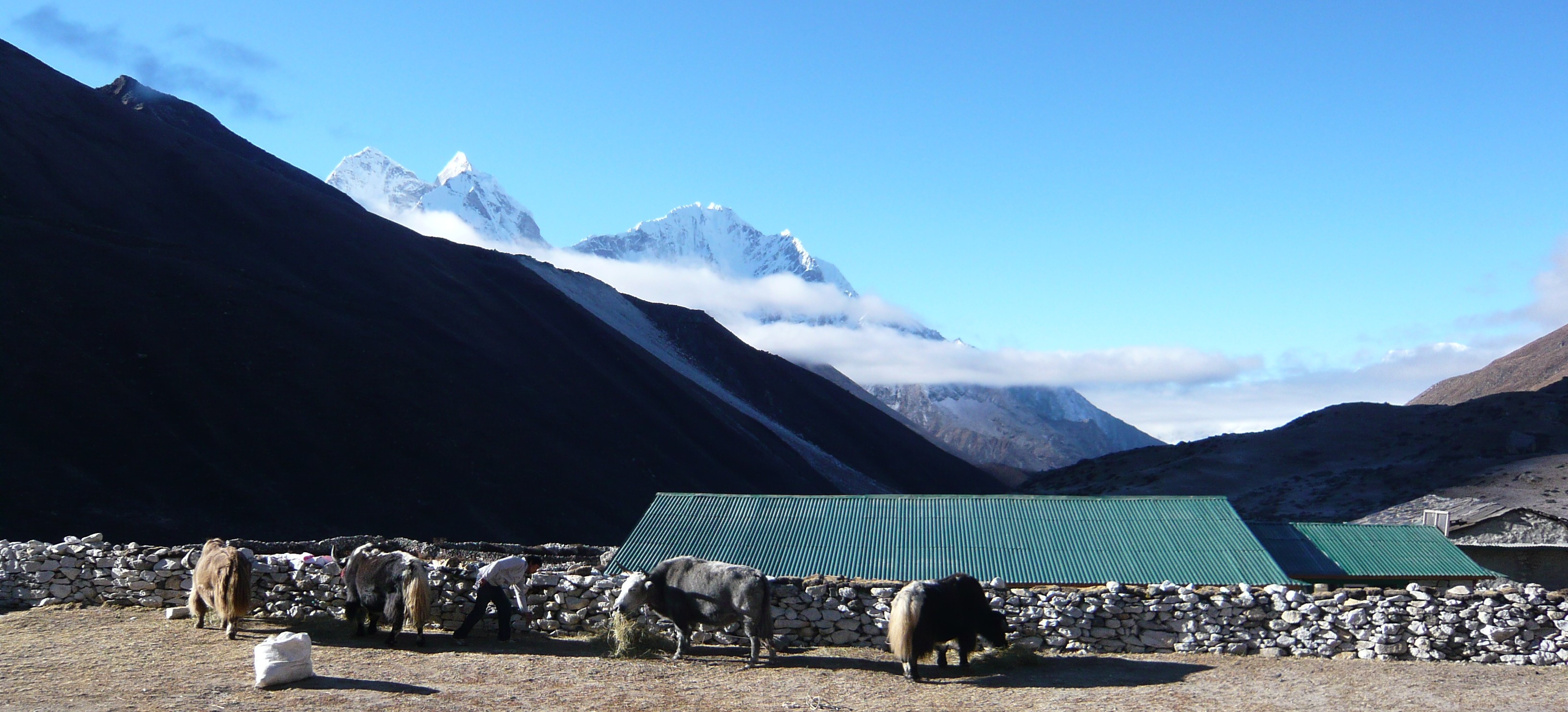
So here’s a picture of some yaks in the Nepalese Himalaya.

You’re welcome.

Phew!

A mere ten days after mentioning I thought I was close to finishing the final draft of A Good Place, it is, in fact, finished. This is the second novel I have written that’s set in India, this time in a fictitious hill station in the Himalaya, amongst the English diaspora remaining behind after Independence.

Having discarded two previous drafts, the skeleton of the story is now essentially the plot I visualised way back when I started.

There is a lesson in there, somewhere.

It will shortly go off to a couple of beta readers for their comments, and then hopefully after that it will just be a case of one final edit, then the hard part. I intend to at least have a go at finding a publisher and / or an agent.

But for now, I think I’ve earned a beer.

Sketch n’ Haiku Day

We’ve had all sorts in the last week.

We’ve had cold, bright, sunny days. We’ve had cold snowy sleety days. And today we have lashing rain and wind. It’s milder than it was, but as miserable as sin and the wind still cuts through you!

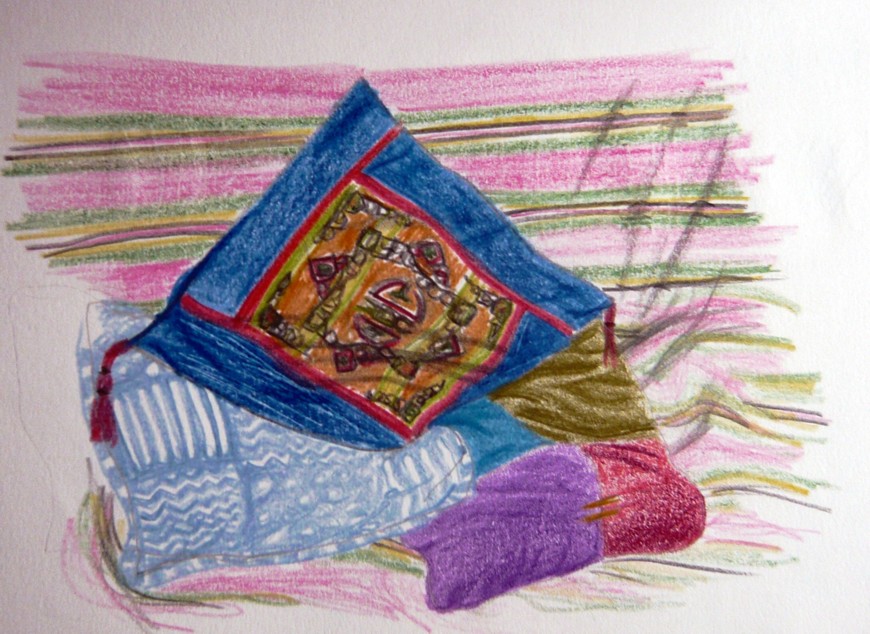
So here is a sketch for the day – cushions on the sofa to remind me of Nepal, since the top one came from there:

002

And here is a haiku for the day, to remind me of summer:

Amidst the traffic,

In the still airs above me,

A lark dripping down.

And a thought for the day? Another haiku, to remind me to slow down sometimes:

Obsession with time

Is climbing trees in autumn

To get down the leaves.

And today I begin the first edit for A Good Place – initially reading it through and thinking about the voice, the narration, to see if it works for me. Next, another read to look for flaws in the plot, redundancies, things to add and take out. Finally, try to knock the grammar into shape. If I’m happy with that, then it’s on to the beta readers.

Hope you all have a good day.

Self Publishing – a Blessing or a Curse?

That depends on who you talk to, of course.

pothi edition

The self publishing boom has given rise to the publication of millions of new books, the majority of which would never have been published traditionally because they would be either deemed to be of insufficient interest to return a profit to the publishers or because they were, frankly, just too terrible to see the light of day.

How good a book is can be very subjective in many ways, but certain rules must apply.

If you buy a traditionally published book, you may be reasonably certain that it has been edited and proof-read to a high standard, the printing and layout of the book is of good quality, and the actual contents – plot, dialogue, character development et al – are sufficiently well written as to repay your reading time.

There are no such guarantees with a self published book.

As a member of several Goodreads groups, I receive regular emails which consist largely of other members promoting their books. These promotions frequently consist of a synopsis of the book, extracts, and links. All well and good, but the number of extracts that are poorly written, unedited (it would seem), with poor print layout, and the number of synopses that are equally poor, is very high indeed. Probably the majority, unfortunately. And should I follow the link to the ebook sales site and read a longer extract, frequently this, too, is filled with more of the same errors.

As far as the plot and dialogue and all that goes with that is concerned, I admit that may be partly down to taste. I have no doubt that some poorly written and poorly plotted books still give great pleasure to many readers, and good luck to them. There are certainly examples of the same amongst traditionally published books. And styles go in and out of fashion, anyway.

What I do take issue with, though, is poor, sloppy editing.

Most people cannot afford to pay for professional editing – I certainly can’t. I understand that. It means doing the job yourself, but taking infinite time and care over it. Check it over and over again until it is the best you can do. The odd mistake will slip through, but that happens even in a professionally edited work. Persuade others to act as beta readers for you. They may not be professionals, but they will spot things you don’t. You are too close to the work, anyway.

If you can’t do that, don’t publish the book.

Let’s take layout first. It only takes a careful look at half a dozen professionally published books to get a good idea of what that layout should look like. And you can buy books that supply more detail. If you are serious about your book, you should do that.

Spellcheck is a useful tool, but only if it is used properly. It recognises a correctly spelled word in its database, but has nothing to say about the suitability of its use. I do find it particularly irritating to come across passages where the completely wrong word has been used, no doubt because Spellcheck flagged it up as the correct spelling. Common examples are groyne / groin, sheer / shear, alter / altar etc. etc. etc.

Grammar is the biggest minefield, though. We all get that wrong at times, even the best of us. But at least avoid the biggest howlers – the so-called grocer’s apostrophe, for example. Put the manuscript through a program such as Grammarly, which is free to download, to pick up the majority of the errors.

Another phenomenon I have seen recently is a 4,000 word story published on Amazon as a ‘Novella’. I suppose there’s nothing wrong with selling a story that length, but anything that comes in at 4,000 words is a short story. And quite a short one at that. To describe it as a novella, no matter what price it is being sold at is, quite frankly, a bit of a bloody cheek.

Please don’t do that.

And I’m sure many other readers have their own pet peeves.


Grumble Mutter Whinge

It is the first of March, today.

Meteorologically, it is the first day of spring. So, that virtually guarantees what weather we will have today; the sky is overcast and grey, there is a bitterly chill wind blowing and a spiteful, thin drizzle.

Spring! Oh, humour!

Arf!

Admittedly, the astronomical calendar tells us spring doesn’t arrive until around the 20th March, so winter still has cate blanchett to do whatever it will.

So that’s fine; it sort of reflects my mood at the moment, anyway. But at least going out for a walk always lifts my mood a little, and today is no exception. I’ve been working on my new novel quite intensely for a while, and I suddenly need to step back from it for a week or two.

Come up for air, as it were.

ladakh 5 panorama

Not this one!

And so I go for a walk in the miserably wintery springy weather. Ten minutes or so through the streets brings me to the common – a wooded area on the edge of the town which, on good days, is a pleasant enough place to walk, even if it doesn’t have any convenient mountains or long distance trails.

On bad days, though, it is full of dog walkers.

That sounds a bit mean, you may say. And, okay, you’re right. It is. But in my defence, when I say full of dog walkers (and dogs), I mean full!

Untitled-Grayscale-01

This one!

It is not unusual to be surrounded by dozens of dogs running madly around, the air filled with strident shouts of ‘Gawain! Guinevere! Come here at once!’ ‘Will you come here!’ ‘Put that down!’ ‘Keep still and he won’t hurt you!’ and then some wretched little tyke suddenly tugging at your trouser leg with a mouthful of razor-sharp teeth, to be followed by another shout of ‘Keep still, I said!’ from a voice that could etch glass.

But not today, fortunately.

And having had my walk, I can sort out a couple of other things on my writing list.

Once I got back, I edited a short story I promised for a project for our writing group. Job done – tick.

Next, I’ll begin the edit of a very long short story that has been hanging around for ages. So long, in fact, that I mentioned it in the ‘My Writing’ section on this blog when I first set it up, a year and a half ago. Tut. It’ll be good to get that finished, anyway. It’s my first attempt at a traditional murder mystery, and I rather got lost in my own convolutions.

If I get it to the point where I’m happy with it, I might put it out as an e-book, just to see what people think of it.

Ahem…if anyone buys it, of course.

And, as a bonus, I had an idea for another short story while I was out walking, so hooray!

Now to barricade the door against all the angry dog walkers.

Ooh, it’s nearly finished!

I’m getting excited, now.

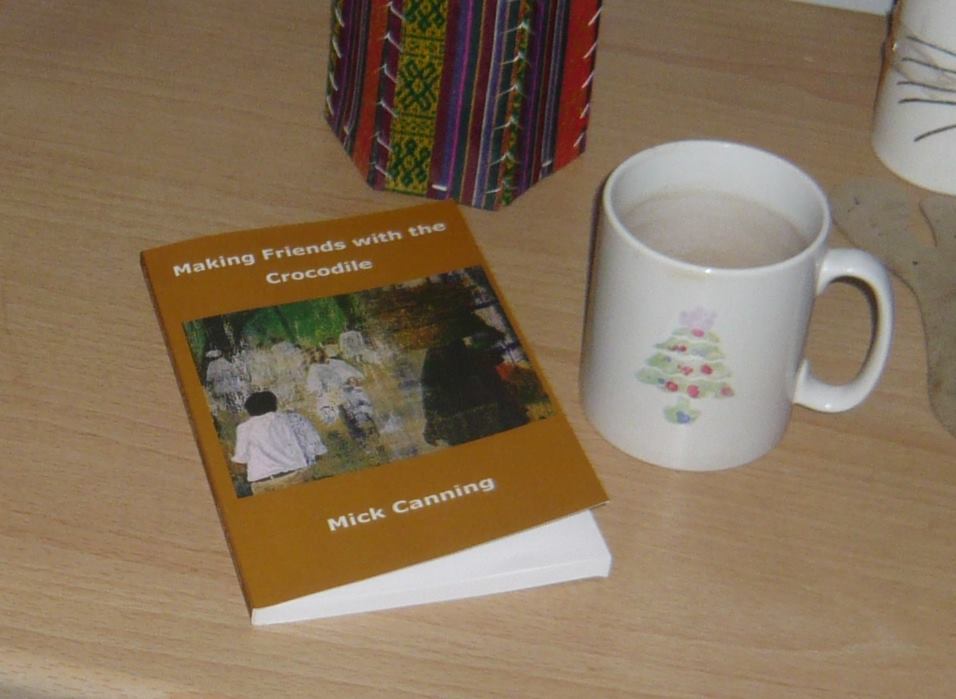
My novel, ‘Making Friends with the Crocodile’ is hopefully ready for its final edit.

This part of the journey seems to be taking a great deal of time, but this might be because it is my first foray into publishing. I know that there is still much to do – formatting, advertising, proof-reading, the publishing itself, amongst a plethora of smaller but no less important tasks – but I am finally beginning to feel that I am getting there.

Curiously, after what I wrote in my last post, I never found any of the characters threatening to hijack the plot in any way. Although I never planned it out in any detail, I had a rough plan in my head, which, remarkably, I kept to. Perhaps it is because the subject matter is strong. I don’t know.

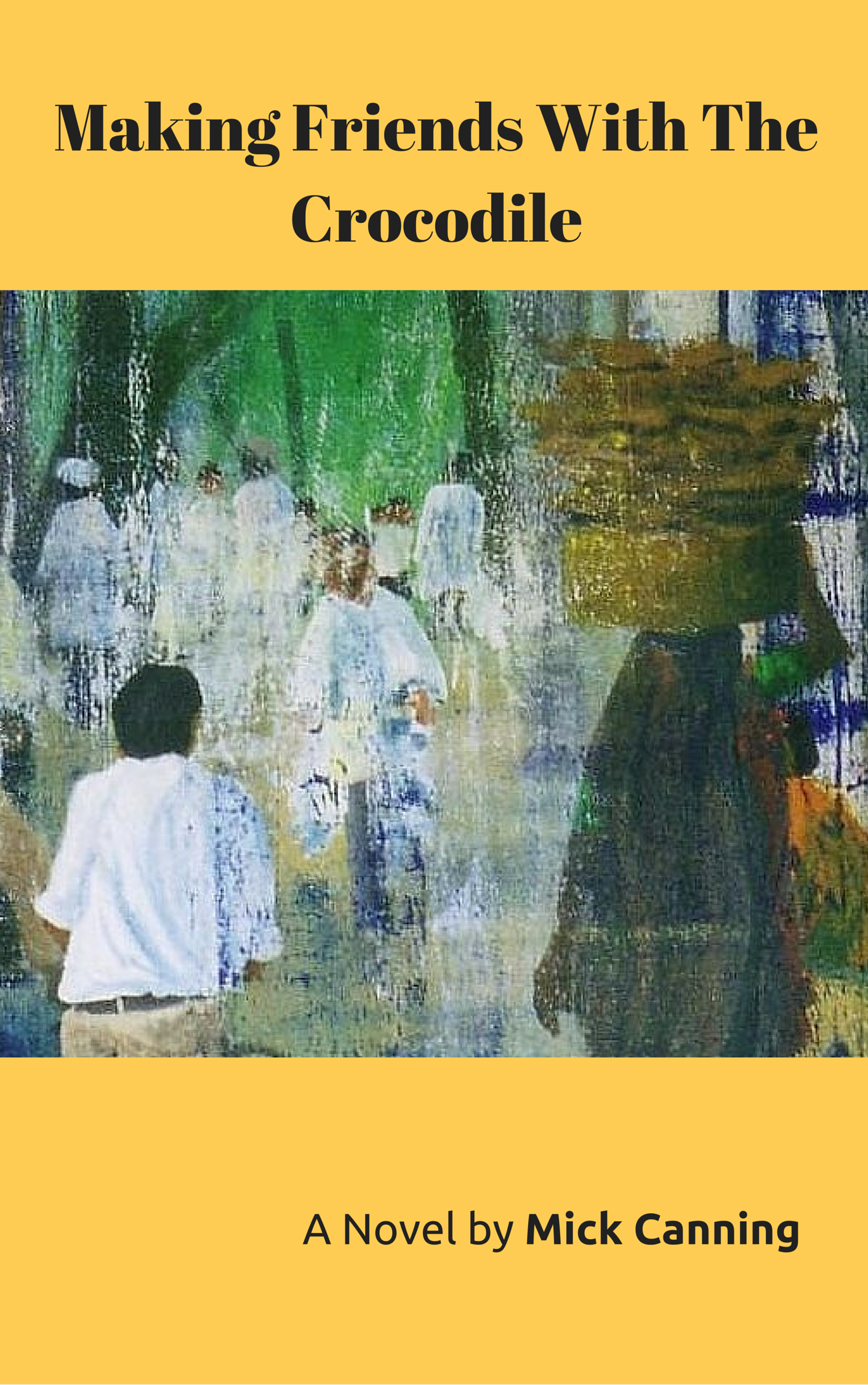
And I think that I have settled upon the cover (the artwork is my own).

Making Friends With The Crocodile cover 1

I may play around with the wording, slightly, for example I might take out the words ‘A Novel’.

For some background; the story is set in a village in Northern India, some fifteen odd years ago. It is about the deteriorating relationship between two women in a family: the mother and her daughter in law. Like this relationship frequently is, it is a strained, fractious one, not helped by that society’s attitudes towards women and their roles in general. And when one of them gets caught up in events beyond her control, these attitudes become dreadfully destructive.

As always, your thoughts would be very much appreciated.

Pitfalls for Writers – 4) Language; a bit of a follow-up

Back somewhere deep in the mists of time, I published ‘Pitfalls for Writers 1’. In this, I discussed some of the potential problems of language in a novel.

If I am to write a story of medieval Persia, for example, I will write it in English. No one who reads it is going to be fooled into thinking that my characters were really speaking in English. But this on its own is not enough. There must be something in the language I use that reminds the reader that the story setting really is medieval Persia.
P1050055

And so I suggested using a flavour of the speech. I might sprinkle the conversation with words such as ‘dirham’ (a unit of currency), or ‘djinns’ (genies). The characters might smoke a ‘qalyan’, which is how they would have referred to what we generally call a hookah. A greeting might be ‘Salām ʿalaykom’.

In the comment stream that followed, I concluded that I might employ a glossary, but certainly not footnotes.

This has now become most relevant to me.

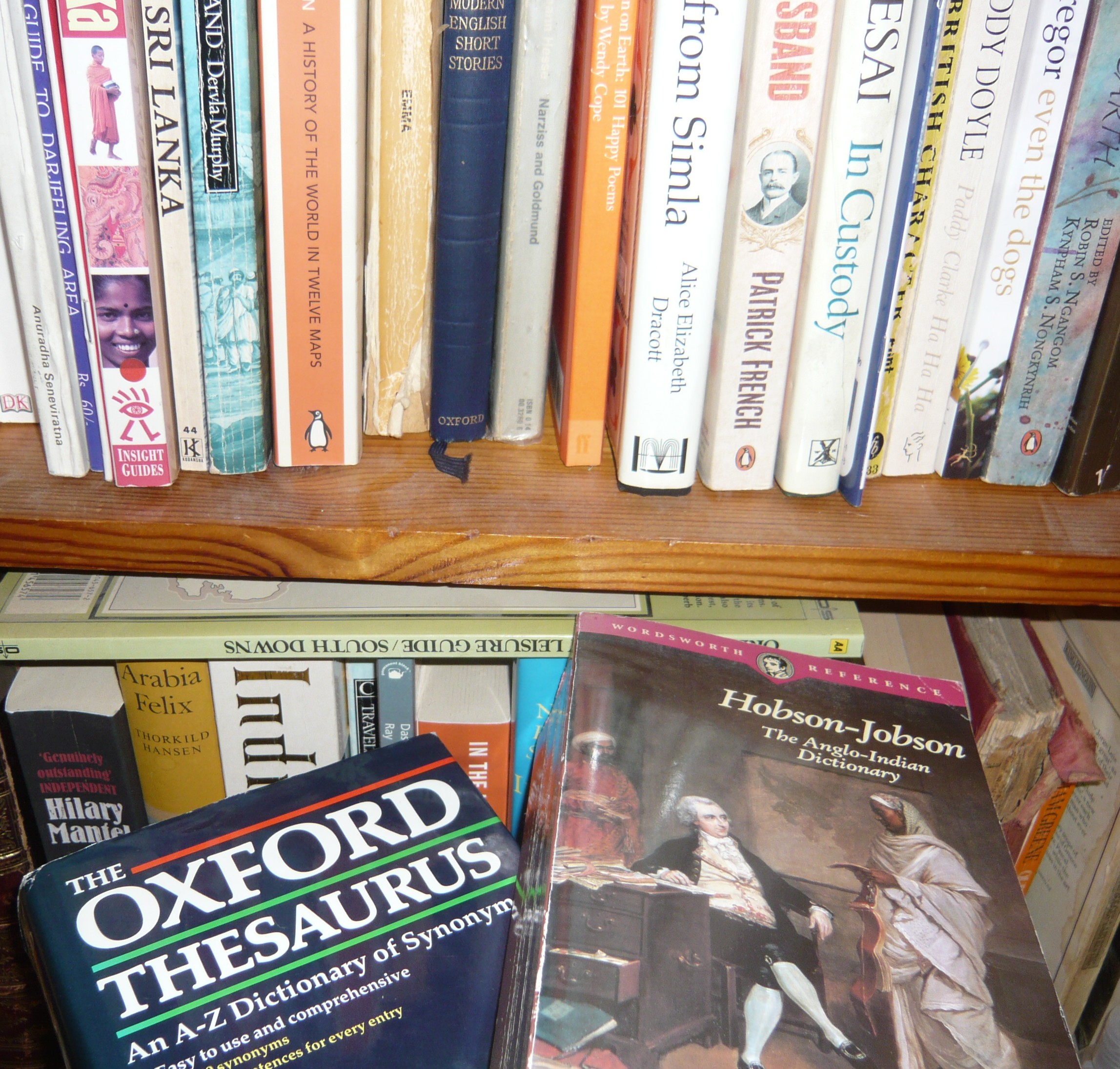
About a month ago, I finished reading Anuradha Roy’s ‘The Folded Earth’. It is a novel that is set in India, written by an Indian writer, yet it uses a glossary, although she is presumably writing in the first instance for an Indian audience. This glossary explains a few words and phrases that many western readers would be unfamiliar with, although I would expect the majority of Indian readers to know them all.

My own novel is being read now by generous beta readers, and some of the discussion is over the use of the appropriate Hindi / Urdu words in the text.

And so, with ‘The Folded Earth’ as an example, I shall definitely use a glossary.

Next, it is important to employ the correct voice.

Speech:

Clearly, if the protagonists of a story are sitting down to a meal, they might complain about the amount of fat on the meat, but they would be most unlikely to refer to it as ‘adipose tissue’. Unless one or both were, for example, surgeons.

Very few people would be likely to refer to two items as being ‘in casual juxtaposition’. They would be far more likely to say something along the lines of ‘oh, they look a bit odd next to each other.’ As tempting as it might be for the author to show off their vocabulary, it is something that should be used most carefully.

Narrator:

If the story actually has a narrator, then this becomes even more important. The country bumpkin relating an everyday tale of rustic shenanigans should not be employing sophisticated and subtle wordplay. He or she should only be employing language that they would naturally use.

Author’s voice:

Even if there is no actual narrator, it remains important to use only language that would be natural to the situation. For example, it sounds plain wrong to describe a group of Vikings ‘computing’ an answer to a problem, even if it is only the author describing it that way.

Generally, of course, and I know that some will disagree with this, it is usually better to avoid all flowery and showy language in novels, and use simple language well.

Finally, a jarring note found in a few modern novels set in older times, is that the characters often think like modern folk. Reading these books as against books written, perhaps, 150 years ago, it is not just the style and language of the writing that are different, but also the prejudices. The hero of a novel set in 1840 is going to have casual prejudices against, perhaps, people of another race, women, etc etc. We tend to be reluctant to set these down in print, nowadays, perhaps as if by doing so we are almost admitting to having these prejudices ourselves.

However, if we want to depict our characters realistically, we need to do so ‘warts and all’. And if the writer is going to depict them otherwise, then he or she needs to have a good reason why they do.
 

Dull day

It is a particularly dull and miserable day, today, with unbroken thick grey cloud overhead, an unpleasant, damp cold, and a very thin rain in the air. I read bits of my novel, and I yearn at this moment to be in India. That I am looking through a few of the photographs I took in India, at the moment, does not help.

P1050060

I am now at the stage of giving my short novel its first edit. I have written the book from the point of view of an adult female in a rural community in Northern India. It is primarily about both the relationship between the two main characters; a woman and her daughter-in-law, and about the roles and the treatment of women in a male dominated society. The way that I have written it, it is essential for the reader to be able to get inside the head of one of the main protagonists. So, for this reason, I felt that the narrator had to be one of them.

It is a little unusual, of course, but hardly unheard of, for a writer to write with the voice of someone of the opposite sex, although it is more usual for female authors to adopt the voice of a male narrator, rather than the other way round.

(Is that because we are so shallow and easily understood? Don’t answer that, it might be a post for another time, although if I did attempt to write it, I probably wouldn’t have the courage to finish.)

Anyway, whether this voice I have used in my novel sounds authentic or not, might be quite another matter.

I can imagine several areas where I might have succeeded less well than I would have hoped;

a) It might sound like a male voice, especially to female readers.

b) I may have painted a vague, shallow picture of my narrator, subconsciously avoiding difficulties.

c) I may therefore have painted minor characters more brightly than the protagonists.

d) By doing this, I may present as an arrogant westerner, thereby fulfilling images of ex-colonial stereotypes.

On my CV, however, I do have a few months when I was living and working in a small town in Northern India, much of the time spent in rural areas, amongst a dozen or so visits to India in total.

It probably goes without saying that I also have a keen interest in most things Indian, many books about India and, of course, we all have Google.

And writers do, all the time, write about places and situations that are outside their experience, and it is never really possible for anyone to fully understand the thought processes of someone from another time, another culture, or another gender, and so it is a level playing field in that respect.

So, with a glance out of the window at the gloom outside, I’ll get on with it. I do wonder how many male writers have tried to write with a female voice, though, and how successful they felt they were…

…anyone want to come in at this point?