Clutch

I thought I would write a poem a day for a week or so. Here is yesterday’s. Of course, if this goes like most of my projects, I’ll probably give up tomorrow. We’ll see.

Clutch

Crook-backed

Misshapen

Bent and jug-eared

Skeletal spindle-shanked and

Shaggy ancient

.

Like troll

The rising sun leaves it forever

Frozen on this hillside

.

Mid-clutch

.

Ice coursed through crippled limbs

Wedged and clinging

Four hundred years too much

In the end

A Busy Time in West Bengal

For the last couple of months, during Lockdown and its easing, I have spent an awful lot of time up in the Himalayan foothills of West Bengal.

bookshop (2)

Okay, that’s not strictly true, but for most of that time I have spent my working day revising, re-writing, and editing A Good Place, my novel set in a fictitious hill station there. I have some new characters to weave in, some old ones to remove, and the story line to alter in several major ways, including a different ending.

I finished the first draft some nine months ago, but there were parts I didn’t feel entirely satisfied with then, and my beta reader unerringly picked those out for major revision. I then spent a while thinking about the story line and took out nearly all the final third of the book and chucked it.

That left me with a lot to rewrite.

Much of the problem stemmed from the fact that after I published Making Friends With the Crocodile, which is set in an Indian village with peopled with all Indian characters, I wanted to write a novel dealing with the British who remained behind in India after partition. A kind of balance to my writing. That was all well and good, but I began writing the novel before I was completely satisfied with the story line, and the more I wrote of it the less I liked it. So I kept changing the story line as I wrote rather than doing what I really should have done, which was delete the whole thing and go away and write something completely different, waiting until I knew what I really wanted to write. But I’m now content that I have the story I want to tell, rather than Just A Story.

Consequently, I have been virtually living in West Bengal during these days, inevitably leading to yearnings to be there in person. Which does nothing to ease the feelings of frustration at enduring the travel restrictions of Lockdown.

050a

However, one of the advantages of having several projects on the go at once, which I always have, is that I can switch to another for a while when I need to. Last week, then, I spent one day giving a final edit to a short story which gave me the opportunity to spend the day (in my head!) in rural Sussex, which was very welcome. Especially as that is somewhere we can get to now, with a minimum of hassle.

And A Good Place? I’m glad you asked. I think I’m close to finishing the second draft, which will be a blessed relief.

Just so long as my beta reader doesn’t throw her hands up in horror when she reads it…

Wandering

I’m posting this poem again, as it rather illustrates what I’ve personally found particularly frustrating during the recent lockdown. We can go for longer walks now, it is true, but that’s still not the same.

015a

If I could just wave a wand,

I would wander the world.

With my notebook in hand,

And a bag on my back.


I would sleep under hedges,

In hotels and haylofts.

Drink beers under trees,

And eat cheese on the moor.


I’d watch clouds over hilltops,

And boats on the ocean.

Shapes and shadows at sunset,

A moon with a view.


And I’d write trivial poems

Of snowfall and sunlight,

Birds singing at dawn

And the sounds of a stream.


There’s the lure of a skyline,

And skylarks above me,

Wine and woodsmoke my welcome,

At the end of the day.


To travel, to journey,

There’s magic in wandering

Over moorland and downland,

Through woods and through fields.


The world’s full of wonders

All waiting for wanderers.

Let me follow these paths

For as long as I can.

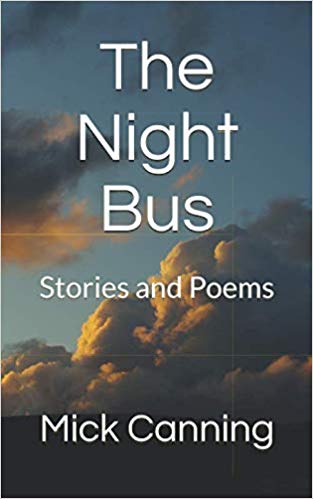
The poem can be found in my collection The Night Bus, which is available here. should your interest have been piqued by this…

Vikings

Allow me to introduce a new joint venture, a magazine (or zine, as I’m informed we hip youngsters now say):

img_20200601_202436_133d

The final poem in my recent collection, The Night Bus, is a poem called Vikings, and it is reproduced in this here zine with a series of super illustrations.

41XAtkb6ssL._SX311_BO1,204,203,200_

This is a collaboration between myself and my talented friend Mark Prestage. As already indicated the poem is mine, while Mark designed, cut and printed the linocuts.

img_20200601_202436_133c

Mark also did the hard work of putting the zine together, while I just sat around and drank beer. The zine is printed on 16 pages of high quality paper, in a preliminary edition of 40 numbered copies.

img_20200601_202436_133b

In the UK the price is £4.50 including postage and packaging, and it can be ordered from my Etsy site: here, or directly from me (just email me) using Paypal. Unfortunately the cost of postage overseas makes it impractical to offer outside of the UK (typically doubling the cost of the zine, or even more).

If people make lots of approving noises, we have ideas for similar projects in the future.

Mark also blogs here: drifting in lower case and twits: twit and is well worth a visit.

Lockdown Stream of Consciousness

107 (2)

Here we are in week whatever it is of Lockdown, and I have to say I’m finding it ever so difficult to dream up a new blog post. It’s not that I’m having any difficulty writing, as I’m making good progress with one of my novels. I timetable my day so I write in the morning and don’t allow myself to look at the internet until after lunch. I go out and walk each day, I’m eating well. And I don’t mind the idea of Lockdown as such, since I’m quite a solitary person at the best of times; fond of my own company and never at my best with groups of people.

When it comes to writing a new post, though, I just seem to dry up. I think one reason for this is the major change to everyone’s lifestyles that this crisis has demanded. Not so much the changes to mine, strangely enough, but those of other people. I look at some of the posts I have partly written and think they seem somehow too trite for today. Some others are about journeys or visits to places I love, and I don’t seem to have the heart to finish them. Perhaps it’s all a bit too raw, too painful. I rarely write political pieces, and have even less enthusiasm at the moment than usual. Again, the politics are either too trite, or just incredibly infuriating. And there are more than enough bloggers covering the infuriating stuff, even if I wanted to.

Write a parody? I do, occasionally. But a parody of the Coronavirus Crisis seems tasteless, and both our inept government and the unpleasant fool in the White House are already parodies of themselves. I could do a humorous one later, I suppose. I might go and see what Bob is up to…

But I don’t feel I’ve anything original to offer at the moment, and I’m generally a subscriber to the school of thought that states if you have nothing to say, then it’s best not to say it.

So I thought today I’d pick a random photograph I haven’t posted before and put that up, and just go with a stream of consciousness, and see where it led me.

It turns out it led me here.

The Great Sandwich Schism – Again

Well, I don’t know about you, but what with you-know-what and the lockdown I feel a bit bleurgh at the moment, so to try to inject a little cheer – or whimsy, anyway – I thought I’d re-post an old one:

Once upon a time, a long, long time ago, God created the world. And he looked upon the world and said ‘Well, so far so good’.

And the world was full of beautiful things and good things and a great bounty of useful things that humans would later ransack and destroy in the name of greed, although that is a story for another day.

But when the people whom God had created looked upon his great works, they said unto Him ‘How might we thank you, oh God? How might we show our gratitude for your benevolence?’

And God replied ‘Oh, I don’t know. I really wish you wouldn’t bother. But if you must, just make me a sandwich, or something. I’m feeling a bit peckish after all that creating.’

013

And so the people made haste to slice bread and find Good Things to become a tasty and delicious filling for the sandwich they had made for their God. And there arose minor disputes such as whether ham and cheese really went together in a sandwich, or whether mayonnaise actually counted as food, but the people settled their quarrel in an amicable fashion and so the sandwich was created and placed upon a golden plate that was decorated with the names of angels and archangels, and set about with small mountains of salad and just a little dash of mustard in case God should fancy some.

And then one among them rose up and said ‘Wait, for we must cut this sandwich before we present it to our God, unless it be a bit too large for him to handle and he drop pieces of cheese from the sides or drip mayonnaise in his holy lap.’

And all at once there arose discord, for some were found who would cut the sandwich in a diagonal fashion, and yet others who declared that would be an affront to His holiness and that the only Right Way would be to cut the sandwich into equal rectangles.

And lo, the factions took up weapons and fought, yea, even in the Holy Kitchen, and they did massacre one another and each declared that the other faction was a worshipper of Satan, who was completely bemused by all this, since he had no followers (not even on Facebook), and they did create rival churches and rival nations and declared undying enmity against each other, spending the next few thousand years thinking up new and more imaginative ways to hate and kill and destroy each other.

And God groaned and held his head in his hands and said ‘Oh verily, what a cock-up this has become. I think I shall destroy the lot of them.’

Lost and Found in Translation

Untitled-Grayscale-02

I have read many novels, short stories and poems translated into English from other languages, but I wonder how much of what I read is true to the original intentions of the authors?

The Argentinian writer Jorge Luis Borges wrote many short stories and poems, all of them in his native Spanish. Although I did buy one collection in Spanish, my own knowledge of that language has always been too poor for me to do anything other than read it slowly and laboriously and, undoubtedly, to miss many of the nuances in the writing. So for that reason, I’ve had to read them in translation.

And in any case, even if I spoke Spanish well I could do little more than read it as translation in my head. Unless I spoke it like a native speaker, I would still likely miss much that the author intended to convey.

And so I buy translations.

Zima Junction by the Russian poet Yevgeny Yevtushenko is a long poem that tells of the poet’s visit to his home town in Siberia, having left some years before to go to live and work in a city. It is a beautiful depiction of rural life in Russia at the time, seen afresh after a gap of several years away, and describes the poets now ambiguous relationship with it.

Long poems can be good vehicles for describing journeys; my own poem The Night Bus does just that, and was written because in that instance I could not find any other medium that worked as well to convey what I wanted to say.

Another favourite of mine is Dart by Alice Oswald, which describes a journey from the source to the sea along the River Dart in Devon, England. She gives voices to the various people encountered along this journey, and to the animals living there…Since it is written in English, I am not left with any worry I am missing things the poet wanted to say, other than perhaps my own occasional inability to understand her.

I have a book of poems from North East India. It is an anthology that I bought in India, with contributions from a huge number of poets. A few of them wrote in English, but the majority of them wrote in other languages – some in Bengali, but the majority in one or other of the plethora of languages to be found in the North East States. And, sadly, most of the translations appear to have been done as a straightforward translation word for word, with no thought given to the feeling of the poem. Any rhythm the poems may originally have had seems to have been lost. The sentences are often clunky and uncomfortable to read. Their meanings have become lost in translation.

But Zima Junction has a natural and comfortable rhythm

The translator of a poem has, to my mind, a task that is more difficult than the translator of prose. Yet, paradoxically, they also have more freedom. More difficult, because they have to get across to the reader ideas or meanings that may be partly concealed in idiomatic language used by the author that perhaps we have no parallel for in English, and hence they may have to completely alter the structure of that part. This will affect a line of poetry far more than it would a line of prose. Immediately, the rhythm of the poem is disrupted, the word count of the line changed.

Yet the reader of a poem has a right to expect a poem. And so, strangely, the translator has the freedom to re-write the poem. In the need for the end result of their translation to be a poem, they may have to completely alter much of the structure to enable the translated words to reassemble themselves as a poem. And so the translators of poems must, by essence, be poets themselves.

So to return to Borges and Yevtushenko, when I read the poems I do wonder whether I am actually reading their poems, or someone else’s?

Why You Should Buy Books (especially mine!)

007

Hours of pleasure for the price of a cup of coffee in Bigbucks.

Like any other worker, you pay for my time. Only unlike the decorator, say, you only pay for a tiny fraction of the real time spent creating your book.

And what do you get for this investment?

Why, I bring you a whole, newly created world to explore!

I introduce you to people you never expected to meet, without the inconvenience of having to make small talk with them.

Heroes and villains, fools and wise men.

Perchance I will take you on a perilous voyage, yet you will return safely to the shore.

Encounter your deepest fears, and overcome them.

Know love, and disappointment, happy ever after and abject failure.

See through the eyes of the cruel and the eyes of the kind.

And all this for less than the price of a coffee.

And unlike the decorator, I won’t come and tread paint into your carpet, disappear for two weeks to do another job, leave your kitchen a complete mess, eat all your biscuits or drink all your tea.

I mean, really, what have you got to lose?

The Christmas Post

For my Christmas Post this year I’m going to do the environmentally correct thing and recycle a post from a four years ago.

The First Christmas Present

The old fellow with the white beard and the red jacket leaned queasily over the side of the sleigh, watching the snow-covered fields passing below. For a while, the moon was peering out between the clouds and he travelled over a scene of sparkling silver, although the sight did nothing to cheer him up.

He hated heights.

He hated elves, now, too. He’d never met one before today, but he knew now that he hated them. The smug little tossers sat right at the back of the sleigh, eating the mince pies that had been left out for him, and tittering whenever he took a wrong turning.

And he hated children. He especially hated children.

Ever since they took away his benefits and told him he would now be better off, he had struggled for money. Now it was November, and he had decided he had to get a Christmas job. Not that he was looking forward to long nights at the sorting office, or lugging a bloody great bag of Christmas cards from door to door. But it seemed he’d left it rather late, and there was nothing left. At least, nothing for someone of his age. Eventually, he found himself in a tiny little room on the second floor of a run-down office building in a backstreet, the home of an agency that he’d never heard of and with a staff, it appeared, consisting of one gentleman who he initially took to be a caretaker and who introduced himself as Mr Nicol.

‘You’ll do nicely,’ he said. With time-shift, it meant that there was no need to cram all the deliveries into a single night; they could be spread out over the whole year. In fact, they tended to use two of them, these days.

‘Two of what?’ His mind reeled.

‘Why, Santas, of course. But even then,’ Mr Nicol went on, ‘it’s difficult when one goes sick for two weeks. And so this is where you come in. What is a problem,’ he explained, ‘is E.U. Working Time Directive number seven. This rules out night work for anyone over the age of fifty. So you’ll have to do the deliveries during the day. Still, time-shift takes care of that.’

He still didn’t entirely understand, but he took the job.

The SatNav was crap. It took twice as long. The first time he tried it, he was terrified to find the sleigh suddenly hurtling between buildings that seemed to be no more than a couple of feet apart, at what must have been close on three hundred miles an hour. It then banked and turned in a tiny back garden, subjecting him to a force of about a hundred g, and then shot back down the same terrible alleyway. It then parked itself on the rooftop next to the one that he had just left.

The elves tittered into their hands.

He quickly found it better to just leave it to the reindeer to sort out. They obviously knew what they were doing.

And then it was impossible to tell how much time had gone past. If he noticed the time in any of the houses they visited, it never made any sense. One clock said ten fifteen. Some while later, he noticed one that said nine forty two. The next said four thirty. For a while, be began to check the time at each house, but quickly gave up when the times appeared to be completely random. He shrugged. More of this time-shift stuff, he supposed. It made it very hard to decide when he should be on lunch break, and he made a mental note to speak to a union rep. at some point.

Another house. Impossible to know how many he had visited. After the thing with the clocks, he was even wondering whether he still had to visit some of the ones he’d already visited.

No, that was too confusing. He shrugged again, and stepped out of the sleigh. The elves followed him with their sacks, and then they all stepped forward, and next thing they were standing in a hallway, just inside the closed front door. Yes, that was weird, too. The elves obviously knew where they were going; he followed them into a darkened front room where a little glass of liquid stood on the table beside a plate with two mince pies. There was a little note that said ‘For Santa, love Benjy’.

He dropped the mince pies into the bag that he wore around his waist for the purpose, and poured the sherry into the flask. He hated sherry, anyway, so the little tossers were welcome to that. With luck, they’d fall out of the sleigh at some point.

The elves trooped noisily out of the room and up the stairs, reached the landing and opened the first door on the right. Inside, a child was asleep in the bed, a large pillow case draped across the duvet.

‘Greedy little bastard,’ he thought. He picked up the pillow case and held it open, while one of the elves seemingly poured in presents randomly from his sack. And then he froze. There was someone coming up the stairs; that wasn’t supposed to happen! All this time-shift stuff was meant to mean that everyone would be asleep from the moment he entered the house until he left again. It all happened in less than a fraction of a nanosecond, in any case.

The footsteps came nearer, and then stopped. A small child appeared at the doorway, but all that he noticed were her sad eyes. She did not seem surprised to see him, nor did she appear overjoyed.

‘You never come to me,’ she said in a quiet, flat voice.

‘I visit all the children!’ he replied, struggling to sound jovial.

‘No. You never come to me. You never have.’ He felt himself squirming under her steady gaze.

‘What’s your name?’ he said at last.

‘Mary. I live with my mother. In one of those flats over there.’ She pointed out of the window towards a few yellow lights that seemed to randomly puncture the darkness.

He glanced at the elves, who shrugged unconcernedly, then sighed and pulled a list from his back pocket and put his reading glasses on.

‘I’m sure we, I mean I, do. What’s the address?’ She stepped towards him and gently took the list from his hand, looked at it for a minute and then pointed.

‘There. But you don’t go to our flat; number three.’

He ran his eyes down the list, clicked his tongue irritably, and then looked a second time, certain he must have missed her name. But no, it definitely wasn’t there. He looked up, to meet her gaze again. Oh, hell. He could take one present from, say, three or four others. They would never miss them, and no one would know.

‘We’d know!’ The first elf glowered at him.

‘You can’t do that!’ the other one pouted. He looked from one to the other, and then back to the little girl, and came to a decision. He reached into Benjy’s pillowcase, picked out a couple of presents and held them out to her. She did not move for a moment, but then she gently smiled, reached out, and took the nearest one. Then she turned and left the room, and he heard her footsteps going down the stairs. He darted out to the landing, but already she had vanished.

‘You’ll be in big trouble,’ a spiteful little voice behind him said happily. He said nothing but did the thing with his fingers he had been taught, and they were back in the sleigh again.

It had been their last call. Now he was watching the elves smirking and whispering to each other, as the reindeer ran smoothly through the clouds. Casually, his hand strayed towards the SatNav, and he pressed the ‘over-ride’ button. The sleigh stopped immediately, and spun round a hundred and eighty degrees, catching the elves completely by surprise and throwing them out of the sleigh and into the night sky.

He hated elves.

I Am The Wind

Untitled-Grayscale-01

I clatter dry leaves along dusty footpaths

And bear burdens far greater

Than mere birds and clouds.


On high, cold, moors I blow

In the hollow eyes of sheep, inert and prone,

And ruffle the hissing grass over barrows

Of long-dead chieftains.


From the fading fires of the sick and the dying

I blow prayers in the smarting eyes

Of disinterested and uncaring gods.


I steal your thoughts.